Posted on Leave a comment

When You Abandon Yourself, You Become Addicted to Approval

Inner Child Healing, Self-Abandonment, and Reclaiming Your Worth

There’s a moment many of us don’t realize is pivotal.
It’s the moment you judge yourself,
and then choose not to feel the pain beneath that judgment.
That moment is where self-abandonment begins.
Not loudly.
Not dramatically.
Quietly.
And when we abandon ourselves, we don’t stop needing love.
We just start looking for it in places that can’t sustain us.

The Inner Child You Learned to Ignore

Inside you lives your inner child, the emotional, intuitive, feeling part of you that learned very early what was safe to express and what wasn’t.

This part of you needs:
Love
Approval
Safety
Emotional presence

When those needs weren’t met consistently, by caregivers, partners, or even by life itself…you may have learned to silence them.

You judged your feelings.
You minimized your pain.
You told yourself to “get over it.”
But your inner child didn’t disappear.
They waited.
How Self-Judgment Creates Emotional Hunger
When you ignore your own pain, your inner child goes looking for relief elsewhere.
That’s when emotional hunger shows up as:
People-pleasing
Over-giving
Fear of rejection
Anxiety in relationships
Hyper-focus on others’ moods
Needing reassurance to feel okay
This isn’t manipulation in the way people often shame it.
It’s survival.
A wounded inner child will do whatever it takes to feel loved, even if that means shrinking, controlling, blaming, or becoming overly compliant.

The Addiction No One Talks About: Approval

When you don’t give yourself love, approval becomes currency.

You start chasing:
Validation
Attention
Being chosen
Being needed

Your worth becomes something other people grant, or withhold.

Without realizing it, you’ve handed your inner child over to others for adoption, hoping someone will finally give them the love you were never taught to give yourself.

This is where relationships begin to feel unsafe, exhausting, or imbalanced.
Because no one can fill the role you abandoned.

Why This Pattern Pushes Love Away
Here’s the painful truth to:

The more desperately you need love,
the harder it becomes for others to stay close.

Neediness can show up as:
Clinginess
Emotional volatility
Controlling behaviors
Over-functioning
Self-betrayal

And when relationships strain under that weight, it reinforces the original wound: the emotional and mental state of mind that tells you that you are alone.

But the truth is simpler, and kinder.
You weren’t too much.
You were emotionally unmet.

Her Legacy Unchained: Choosing Self-Devotion Over Self-Abandonment

At Her Legacy Unchained, healing begins with one radical shift:

You stop outsourcing your worth.

Inner child healing looks like:
* Listening to your feelings without judgment.
* Offering compassion instead of criticism.
* Sitting with discomfort instead of numbing it.
* Reparenting yourself with consistency and care.

When you choose yourself, the inner child inside you finally feels safe.

They stop begging. They stop performing.

They stop panicking.

Love becomes something you share, not something you chase.

Breaking the Cycle for the Next Generation

When you heal self-abandonment, you don’t just change your relationships, you change your legacy.
You teach your nervous system that love doesn’t have to be earned. You model emotional safety, for yourself and for those watching you. You stop passing down unmet needs disguised as strength.

And that is how cycles end.
Not through perfection.
But through presence.

If you enjoyed reading this, please follow me and share it with someone who may need to hear these words. 

Posted on Leave a comment

Something Always Felt Off, Until I Realized I Was Born to Break the Cycle

 This is my path of choosing God over guilt, peace over routines, and legacy over comfort. It goes from quiet sadness to healing for my family.

Unsplash

I thought something was wrong with me for most of my life.
It seemed like I didn’t fit in anywhere I went.

I didn’t know that the burden I bore had a name: generational trauma.

I used to think that what I regarded as weakness was what made me strong enough to end the pattern.

The Quiet That Said More Than Words

The hardest thing for my family to carry was silence.

Addiction. Trauma. Quiet sadness.
They were all there long before I arrived.

I saw countless family members I loved dearly simply get through life, but not really experience it.
Plans for the future were put on hold. As time went on, their hearts began to turn cold.

Don’t get me wrong, there was some display of affection.
But in my most of the time, that was something you had to earn in my household.

When I asked questions like:

“Why do we keep acting like this?”

“Why doesn’t anyone in this family ever say they’re sorry?”

A lot of my relatives sighed and some even looked at me sideways.

But I knew deep down that this wasn’t how the story was supposed to end, at least not my story.
From a young age, I knew I would ultimately be the one who would break the pattern and save the future.

Becoming the Pattern Breaker

When you’re in it, it doesn’t necessarily feel good to interrupt the cycle. It leaves you with this overwhelming feeling of being alone, and misunderstood.

Often times, it can look like you’re crying in your car after you set limits that your younger self would have begged for.
It means putting healing ahead of hiding, God ahead of guilt, and treatment ahead of tradition.

What Healing Looked Like for Me

No more letting people I love control my feelings.

I wish I had different parents, but I forgive the ones I do have.

Loving myself without needing anyone else’s approval.

I hugged myself and whispered, “You are safe now.”

I used to ask God to make me normal, but he didn’t.
To help me stop feeling so much. To help me feel like I belong.

But my prayer altered over time.

I thank Him now.

I finally get it: I wasn’t born into this family to fit in. I was born to be free.

Healing isn’t only for me.

It’s for my kids.

It’s for their kids.

And it’s for the little girl I used to be, the one who needed someone like me.

The Black Sheep Could Be the Shepherd

If people have labeled you the black sheep of your family, here’s the truth: You might really be the shepherd!

It’s hard to be the one who says, “No more.”
But every time you say those words, you’re making something new.

Your family might not know how much they need you, but they do.
And certainly, it can be lonely at times.

But legacy never really begins in a safe place.
It all starts with one brave person doing what everyone else is too scared to do.

You Are Not Alone

If you think you don’t fit in because you’re too sensitive, too spiritual, too honest, or too different, please listen to me:

You are not too much.
You’re simply right.

You were born to break the cycle.
Now, go create something lovely.

If this spoke to you, share it with someone who needs the reminder that their peace is worth protecting. 

Posted on Leave a comment

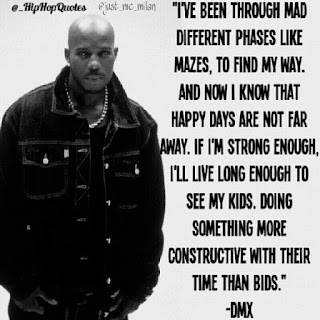
I’m Slippin’: How DMX Gave Voice to My Generational Pain

Healing Through DMX’s Slippin’: Breaking the Chains of Generational Trauma

“To live is to suffer. But to survive, well, that’s to find meaning in the suffering.”
DMX, Slippin’

@just_me_milan on 

flickrListen to DMX’s “Slippin’” on YouTube

A Voice That Echoes Our Pain

The first time I heard DMX’s Slippin’, I was sitting in my childhood bedroom, headphones on, trying to drown out the weight of the world. His voice, raw and jagged like broken glass held together by sheer will, cut through the silence of my own struggles. It wasn’t just a song; it was a lifeline. The pain in his lyrics mirrored the battles I’d carried since I was a kid, the kind of battles passed down like cursed heirlooms through generations. For the first time, I didn’t feel alone in my fight.

Slippin’ is more than music. It’s a confession etched in rhythm, a prayer screamed into the void. It tells the story of a young Black boy navigating a world that refused to make space for his pain. It’s about trauma buried under silence, survival without healing, and the strength it takes to keep going when the ground keeps shifting beneath you. For those of us raised in homes where love was fierce but fractured, where wounds were hidden behind forced smiles, DMX’s voice was a mirror, reflecting the truth we’d been taught to hide.

Trauma: The Faces We Inherit

DMX didn’t just rap about trauma, he lived it, bled it, and poured it into his music. Songs like Look Thru My Eyes, I Miss You, and Damien are raw portraits of a man wrestling with demons: abandonment, betrayal, trust issues, and a hunger for love he didn’t always know how to accept. His vulnerability was revolutionary, especially in a genre often cloaked in bravado.

In I Miss You, DMX’s grief for his grandmother, the one steady light in his turbulent life, feels like a wound laid bare. For so many of us, our grandmothers were our safe havens, the ones who held us when the world felt too heavy. When they left, they took a piece of our stability with them.

“I’m tryin’ hard to be what you wanted / But I’m still slippin’, I’m still fallin’.”

These words capture the ache of an inner child still reaching for safety, for someone to say, “You’re enough.” DMX gave voice to that longing, making it okay to admit we’re still searching for solid ground.

The Duality of Hurt: Breaking the Cycle

Healing from generational trauma requires facing a brutal truth: the people who hurt us were often hurting too. DMX never shied away from this duality. He didn’t excuse the abuse or neglect he endured, but he also laid bare how he carried that pain into his own relationships, unintentionally repeating cycles even as he fought to escape them.

That tension, being both the wounded and the one who wounds, is the heart of generational trauma. It’s why healing isn’t just about us; it’s about rewriting the stories of those who came before and those who’ll come after. When I listen to Slippin’, I hear more than DMX’s voice. I hear my father’s unspoken regrets, my mother’s quiet battles with depression, my own silent screams. I hear the weight of generations and the courage it takes to declare, “This ends with me.”

Breaking these cycles isn’t easy. It’s messy, nonlinear, and often feels like betraying the very survival mechanisms that kept us alive. But it’s also liberation. It’s choosing to unlearn the lessons of silence and shame, to replace them with vulnerability and truth.

Still I Rise: The Power of Honest Resilience

DMX’s music wasn’t polished, and that’s why it resonated. It was real, gritty, and human. His willingness to cry out to God, to admit he was lost, to rage and pray in the same breath, made him a beacon for those of us navigating the gray space between hope and despair.

In songs like Lord Give Me a Sign and The Prayer, you feel the war between light and darkness, faith and doubt. That’s what healing looks like when you’re still bleeding, when every step forward feels like a battle, but you take it anyway. DMX showed us that resilience isn’t about being unbreakable; it’s about getting up, even when you’re slippin’.

His music reminds us that we don’t have to be perfect to be powerful. We just have to keep trying. And so do we, every single day.

Practical Steps to Heal and Break the Chains

Healing from generational trauma is a journey, not a destination. Here are a few practical steps to start:

  1. Name the Pain: Journal about the patterns you’ve noticed in your family. What hurts were passed down? Naming them is the first step to dismantling their power.
  2. Seek Safe Spaces: Find a therapist, support group, or trusted friend to share your story. Healing thrives in community.
  3. Honor Your Inner Child: Reconnect with the younger version of yourself. What did they need that they didn’t get? How can you offer that now?
  4. Set Boundaries: Protect your peace by setting limits with people or patterns that trigger old wounds.
  5. Create New Legacies: Intentionally build habits and traditions that reflect the love and healing you want to pass on.

For more resources, check out The National Alliance on Mental Illness (NAMI) or explore books like It Didn’t Start With You by Mark Wolynn for deeper insights into generational trauma.

Why This Matters for Our Legacy

As women breaking cycles, we carry a sacred responsibility. Honoring the pain we’ve inherited doesn’t mean dwelling in it, it means naming it so we can stop its spread. DMX did that through his music, turning his wounds into anthems of truth. That raw honesty was his first step toward freedom, and it can be ours too.

If you’ve ever felt unloved, unseen, or like survival was your only option, know this: you are not alone. And if you’re working to unlearn what survival taught you so you can truly live, DMX would get it. His music was a testament to that fight.

Let’s Connect: Share Your Story

Music has a way of saying what words alone can’t. Has a song ever put your pain or hope into words? What does healing look like for you right now?

Don’t Forget rop a comment below or share your story. 

This space is for all of us breaking chains, together. And if DMX’s story resonates with you, explore more of his music or share this post with someone who needs to hear it! 

 👇👇👇

Related Posts: